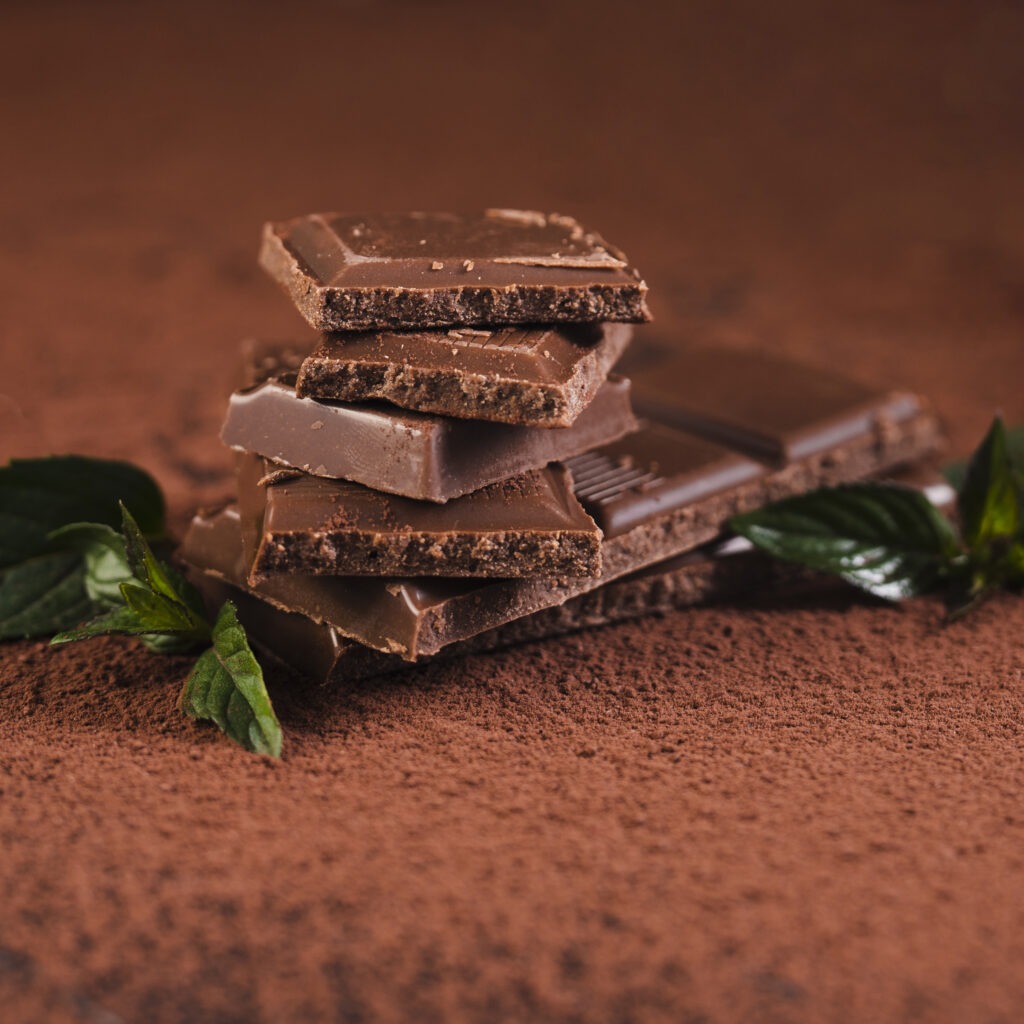
How to recognize fine chocolate?
How to recognize fine chocolate?
To recognize fine chocolate, begin by carefully examining the ingredient list. As a general rule, the fewer ingredients it contains, the better. Moreover, an organic certification provides an additional guarantee of quality, ensuring the absence of synthetic pesticides.
When evaluating the composition of dark chocolate, first ensure that the primary ingredient is cocoa beans rather than cocoa mass. This is a primary hallmark of authentic quality: the product remains minimally processed. It may then simply contain sugar—and that is all! Ideally, this preserves all the natural virtues and nuanced aromas of the cacao, provided it is crafted according to traditional artisanal methods. In other words, there is no need to add so-called natural flavorings, as cacao inherently possesses its own rich aromatics.
Furthermore, dark chocolate must contain cocoa butter—a noble and readily assimilated fat, especially when extracted naturally without chemical solvents. Be sure to check that no dairy fat or other added fats appear in the ingredients (such as milk fat, butter, or palm and other vegetable oils).
Next, pay close attention to the cocoa percentage of your bar. The higher the percentage, the less sugar it contains. Take care as well to ensure that no artificial or alternative sweeteners have been introduced. If you choose a 100% cacao bar, it will contain zero added sugar. At this purity, it is often referred to by experts not merely as "chocolate," but as cocoa mass or cocoa liquor, containing solely the wholesome carbohydrates naturally present in the cacao bean.
In summary, a high-quality dark chocolate should contain neither milk, nor soy lecithin (or any other lecithin), nor vegetable fats other than pure cocoa butter, nor added cocoa powder.
Finally, it is essential to remember that cocoa butter is a vital fat, much like omega-3 (ALA), which the human body recognizes and metabolizes into monounsaturated fatty acids. Plant-based omega-3 ALA (alpha-linolenic acid), recognized by our metabolism, is partially converted into DHA and EPA through enzymatic elongation. In other words, the "grandfather" ALA can yield about 25–30% of the "father" DHA and the "son" EPA, depending on cellular health. Omega-3s DHA and EPA are typically found in oily fish, while ALA is naturally abundant in botanicals such as flaxseeds, under the right conditions.
In conclusion, these wholesome nutrients are vital for supporting healthy neural connections and cognitive well-being.
Chocolate may also be enriched with various dried fruits and nuts (hazelnuts, almonds...) or with wholesome seeds such as flaxseeds, chia seeds, hemp seeds...
In milk chocolate, the primary ingredient listed may be either "cocoa beans" or "sugar." The latter will yield a noticeably sweeter profile. It is then crafted with cocoa mass, sugar, and whole milk powder. Genuine milk chocolate always contains pure cocoa butter. Be sure to verify the cocoa percentage here as well.
Always check that your milk chocolate contains neither soy lecithin nor added vegetable fats.
You may also wish to check whether the glycemic index is stated on the packaging. Finally, it is time for the tasting.
Omegachoco® features a remarkably low glycemic index of 21.
To learn how to properly taste chocolate, click here.
Stay informed about our complimentary masterclasses on "How to taste chocolate" or "How to choose fine chocolate" by clicking here.
You are warmly invited to taste our creations in person at our artisan organic chocolate workshop in Availles-en-Châtellerault, in the Vienne department (86), just 20 minutes from Futuroscope, or order directly from our online boutique by clicking here.